
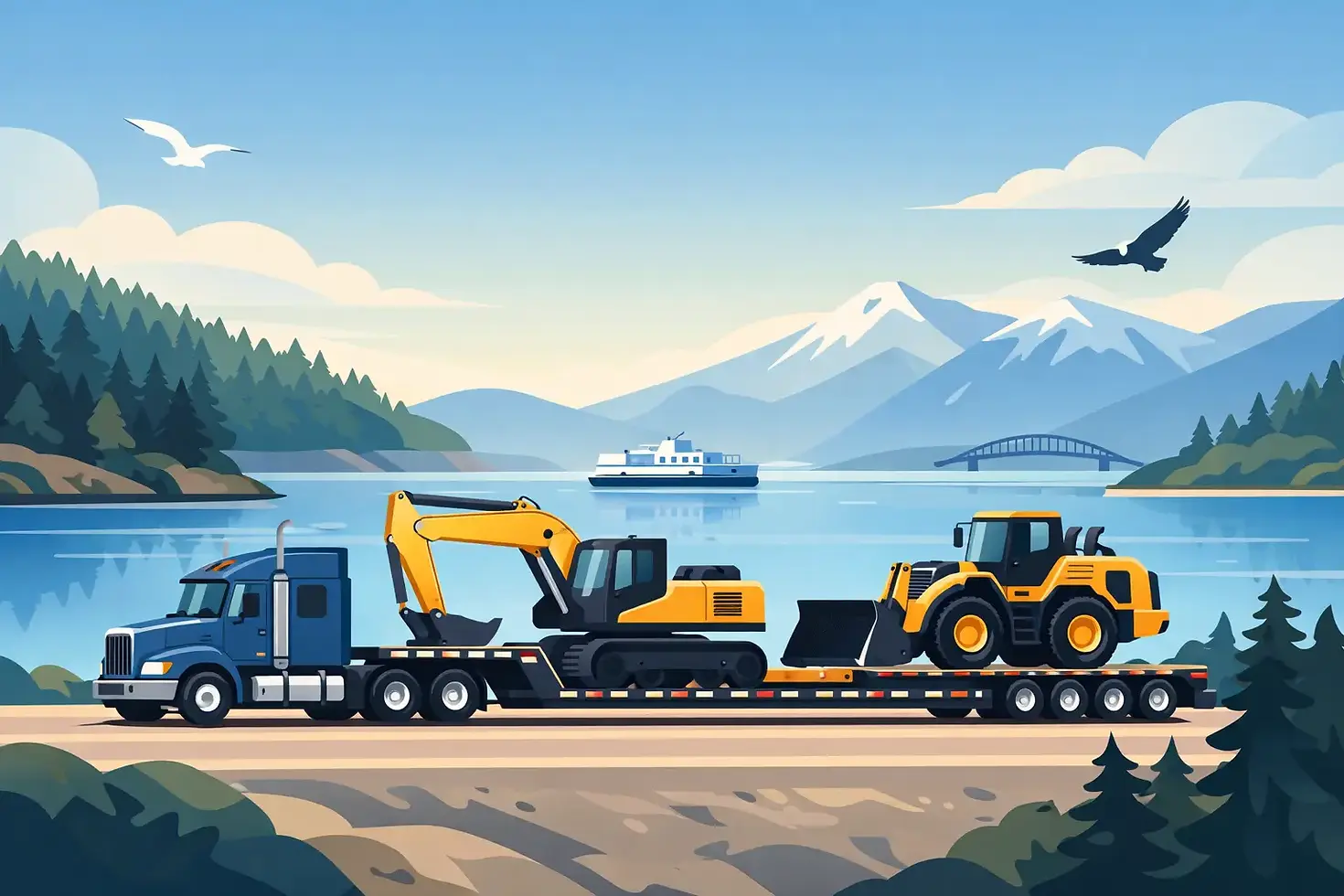
Heavy Equipment Hauling Services on Vancouver Island
- allislandtowingand
- Aug 3
- 5 min read
A machine sitting idle at the wrong site can hold up an entire job. Whether you need to move an excavator to a new build, deliver a skid steer to a rural property, or relocate equipment after a breakdown, heavy equipment hauling services need more than a truck and trailer. The load, route, timing, securement, and site access all need to be considered before transport begins.
For contractors, property owners, farms, and industrial crews across Vancouver Island, dependable transport keeps projects moving. The right hauling provider helps you plan the move safely, avoid unnecessary delays, and get equipment where it needs to be without putting your crew, machine, or other road users at risk.
What heavy equipment hauling services involve
Heavy equipment hauling is the planned transport of machinery that cannot be safely or practically driven to its next location. This can include excavators, skid steers, compactors, lifts, tractors, loaders, attachments, generators, machinery parts, and job-site materials. Shipping container transport may also require similar planning, although the loading method and trailer requirements can be different.
The job starts by matching the right truck, trailer, and loading approach to the machine. Weight matters, but it is not the only factor. Equipment height, width, length, ground clearance, track or tire type, attachment position, and the loading area all affect how the move should be handled.
A compact excavator on a clear, paved site is a different job from a large machine being collected from a wet rural property. Likewise, a transport from Parksville to Nanaimo may be straightforward, while a move through a narrow driveway near Coombs, Bowser, or Port Alberni may need more route and access planning.
Why the right hauling setup matters
Heavy machinery creates real risk when it is loaded or secured incorrectly. A load that shifts in transit can damage the equipment, trailer, or surrounding vehicles. Excess height or width can create route problems, especially on Vancouver Island roads with low clearances, tight turns, steep grades, construction zones, and changing weather.
A professional hauler assesses the equipment before dispatching the appropriate unit. That means confirming the machine's operating weight, not relying on a rough estimate, and considering whether buckets, forks, booms, blades, or other attachments should be positioned, removed, or transported separately.
Securement is equally important. Proper chains, binders, tie-down points, and load balance are not optional details. They are what keep the equipment stable through braking, turns, uneven pavement, and hill climbs. If a move requires an oversize permit, route restrictions, or special scheduling, those details should be handled before the equipment is loaded.
Information to have ready before you book
Good information prevents last-minute surprises. When requesting heavy equipment hauling services, provide the equipment details as accurately as possible. A few clear photos can also help a hauler assess the load and the pickup conditions.
Be ready to confirm:
The make, model, and approximate operating weight of the equipment
Overall dimensions, including height, width, length, and any attachments
The pickup and delivery addresses, plus any gate codes or site contact names
Whether the equipment runs, rolls, steers, and brakes normally
Ground conditions and access issues such as mud, slopes, narrow driveways, or overhead branches
Your preferred pickup window and any job-site deadline
If you do not know the exact specifications, share the machine model or serial information where available. It is better to confirm the load properly than to send a truck that is not suited to the job.
Let the hauler know if the equipment is disabled
A non-running machine can still be moved, but the plan may change. A disabled excavator, loader, or lift may need winching, recovery equipment, extra labour, or a different loading angle. Be upfront about flat tires, damaged tracks, seized brakes, missing keys, leaks, or equipment that is stuck off-road.
This is not about making the job more complicated. It allows the hauler to arrive prepared, rather than discovering a recovery situation after reaching the site. All Island Towing & Automotive Repairs can assist with heavy equipment transport as well as specialized recovery needs when site conditions call for more than a standard pickup.
Route planning on Vancouver Island
The shortest route is not always the safest or most practical route for heavy equipment. Vancouver Island has major highways, rural roads, logging roads, residential streets, bridge restrictions, steep sections, and seasonal construction. A route that works for a pickup truck may not work for a loaded trailer.
Professional planning considers clearance, turning room, road weight limits, traffic patterns, and safe places to stop if an inspection is needed. For larger or wider equipment, permit requirements and travel restrictions may apply. These requirements depend on the load dimensions, total vehicle weight, route, and the roads involved.
If your machine is moving between communities such as Qualicum Beach, Nanaimo, Courtenay, Campbell River, or Port Alberni, booking ahead gives more room to coordinate the right equipment and travel window. Same-day service may be possible for some moves, but availability depends on the size of the load, current dispatch demands, and whether special permits are needed.
Weather and site conditions can change the plan
Rain can turn an otherwise accessible job site into a soft, slippery loading area. Wind, ice, standing water, low visibility, and loose gravel also affect safe transport. On rural or undeveloped properties, a driver may need to assess whether the truck and trailer can enter, turn around, and leave without damaging the site or becoming stuck.
If conditions are uncertain, describe them when you call. A practical conversation before dispatch can save time and help prevent a failed pickup.
How to prepare equipment for transport
The equipment owner or site supervisor can make the process faster by preparing the machine before the hauler arrives. Remove loose tools and personal items from the cab. Secure doors, panels, and detachable accessories. If possible, clean off excess mud or debris that could affect visibility, weight, or safe loading.
Fuel level can also matter. A full tank adds weight, so it may be worth discussing whether the machine needs to travel full or whether a lower fuel level is appropriate. The answer depends on the equipment, travel distance, and your operating needs at delivery.
Make sure someone authorized to release the equipment is on site. At the destination, confirm that there is a clear unloading area and that the receiving crew knows when the delivery is expected. A loaded trailer cannot safely wait in every driveway, lane, or active work zone.
Choosing a hauling provider
Price matters, but it should not be the only question. A low quote can become expensive if the provider arrives with unsuitable equipment, cannot access the site, or fails to account for a disabled machine or oversized attachment.
Ask whether the company has experience with your type of machinery and whether it can handle both transport and recovery if the equipment is not mobile. Confirm what information is needed for an accurate quote, how scheduling works, and whether the route or load may require added planning.
For repeat commercial moves, consistency is valuable. Working with one local provider that understands your common sites, equipment types, and operating hours can reduce the back-and-forth when a machine needs to move quickly. It can also be useful to have a provider that offers towing, roadside help, and mechanical support if a transport issue is connected to a truck or fleet problem.
Plan the move before the machine is needed
Heavy equipment transport works best when it is treated as part of the job schedule, not an afterthought at the end of the day. Share the full equipment details, prepare both sites, and allow enough time for the appropriate truck, trailer, route, and permits where required. A well-planned move gets your machine to the next job ready to work, rather than creating another delay to solve.


Comments