
Top Signs a Car Needs Repair on Vancouver Island
- allislandtowingand
- Jul 16
- 6 min read
A warning light on the way to work in Nanaimo, a brake pedal that suddenly feels soft near Parksville, or a temperature gauge climbing on a drive toward Port Alberni can turn an ordinary trip into a costly problem. Knowing the top signs a car needs repair helps you make the right call early: book a shop visit, pull over safely, or arrange a tow before the vehicle leaves you stranded.
Not every noise or dashboard light means an emergency. But waiting for a symptom to disappear can turn a manageable repair into a breakdown, especially when you are travelling between communities, towing a trailer, or relying on your vehicle for work. Here is what Vancouver Island drivers should watch for.
Top Signs Your Car Needs Repair Now
Warning lights that stay on
The check engine light can mean anything from a loose fuel cap to an engine misfire, so the light itself does not always mean you need to stop immediately. A steady check engine light should still be diagnosed soon, particularly if fuel use has increased, the engine runs roughly, or the vehicle has lost power.
A flashing check engine light is more urgent. It can indicate an active misfire that may damage the catalytic converter. Reduce speed, avoid heavy acceleration, and arrange service as soon as it is safe.
The red oil-pressure, brake, battery-charging, or engine-temperature lights require more caution. If the oil-pressure light comes on while driving, pull over and shut off the engine as soon as it is safe. Running an engine without proper oil pressure can cause severe damage quickly. A battery light may mean the alternator is not charging, so the vehicle can lose electrical power and stop once the battery is drained.
Overheating or a strong sweet smell
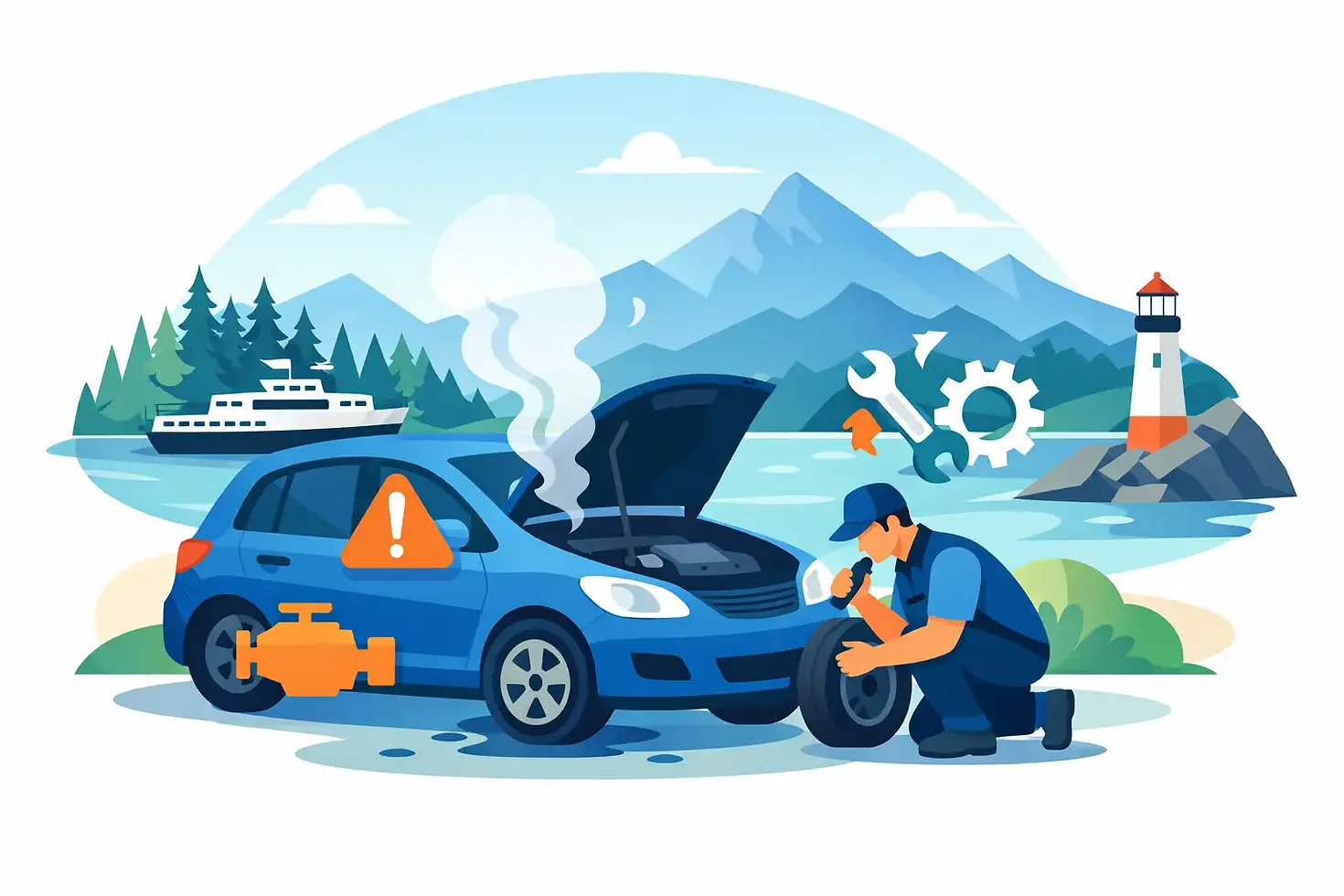
Your temperature gauge should remain in its normal range. If it rises toward the hot zone, steam comes from under the hood, or you smell a sweet coolant odour, pull over safely and turn off the engine. Do not open the radiator cap while the engine is hot. Pressurized coolant can cause serious burns.
Overheating may result from a coolant leak, failed thermostat, damaged hose, cooling fan issue, or water-pump problem. Continuing to drive can warp engine components or damage a head gasket. The trade-off is simple: a tow may feel inconvenient, but it is often far less expensive than an engine replacement.
Brakes that feel, sound, or behave differently
Brake concerns should never be put off. A squeal during light braking can be an early pad-wear indicator, while grinding may mean the brake pads are worn down enough that metal is contacting the rotor. At that stage, a brake job can become more extensive.
Pay attention to a soft or sinking brake pedal, vibration through the pedal or steering wheel during braking, a vehicle that pulls to one side, or increased stopping distance. These symptoms can point to worn pads, uneven rotors, seized calipers, brake-fluid loss, or hydraulic trouble. If the brake pedal feels unsafe, do not drive the vehicle to a shop. Have it towed.
Steering changes, shaking, or a vehicle that wanders
A vehicle should track straight with only normal corrections from the driver. If it pulls sharply, wanders across the lane, shakes at highway speed, or feels loose through the steering wheel, it needs attention. Causes range from a tire-pressure issue or wheel imbalance to worn suspension parts, alignment problems, or steering-component wear.
A new vibration at a specific speed may be related to tires or wheels. Vibration that appears when braking often points to brake components. A clunk over bumps, especially on rough rural roads, can be a suspension issue. The exact cause depends on when the symptom occurs, which is useful information to share with the repair shop.
Sounds and Smells That Should Not Be Ignored
Cars make normal operating sounds, but new, repeated noises are worth checking. A high-pitched squeal at startup may be a worn belt. Clicking while turning can indicate a CV joint issue. A humming or growling noise that increases with road speed may come from a wheel bearing or tire problem. Knocking from the engine should be assessed promptly, particularly if it appears with low oil, poor performance, or a warning light.
Burning smells also matter. A burning-rubber smell may come from a slipping belt or a tire rubbing against another component. A burning-plastic odour can signal an electrical fault. A sharp, acrid smell after braking may indicate overheated brakes or a seized caliper. If you smell fuel inside or outside the vehicle, stop driving when safe and arrange an inspection. Fuel leaks create both safety and fire risks.
Fluid Leaks Are One of the Clear Signs a Car Needs Repair
A few drops of clear water under a parked vehicle may simply be air-conditioner condensation. Other fluids deserve a closer look. Engine oil is usually brown or black. Coolant may be green, pink, orange, or blue depending on the type. Transmission fluid is often red or reddish-brown, while brake fluid is generally clear to light brown.
Check the area where the vehicle was parked and note the colour, location, and amount of fluid. A small seep may allow time to schedule a repair, but a growing puddle, a low-fluid warning, overheating, or a change in braking or steering should move the issue up the priority list. Never assume topping up a fluid solves the underlying leak.
Trouble Starting, Stalling, or Losing Power
Slow cranking, repeated clicking, dim lights, or electrical accessories that behave erratically can indicate a weak battery, corroded terminals, alternator trouble, or a poor connection. Cold and wet weather, short trips, and an older battery can all make starting problems more likely.
A boost may get a vehicle running, but it does not always fix the cause. If the battery dies again soon afterward, the charging system and battery should be tested. Repeated boosting can leave you stuck at home, at a trailhead, or in a parking lot when the vehicle will not restart.
Stalling, hesitation, rough idling, or a noticeable loss of acceleration also call for diagnosis. These symptoms may involve fuel delivery, ignition, air intake, sensors, or transmission operation. Do not force a struggling vehicle to tow an RV, trailer, or heavy load. Extra load can turn a minor drivability issue into a roadside failure.
Transmission Problems Need Early Attention
An automatic transmission should shift smoothly and predictably. Delayed engagement when shifting into drive or reverse, slipping between gears, harsh shifts, revving without matching acceleration, or a transmission warning light are all reasons to book service.
Manual-transmission drivers should watch for clutch slipping, difficulty selecting gears, grinding during shifts, or a clutch pedal that feels unusually soft or stiff. Some transmission repairs are complex, but early diagnosis can sometimes prevent further damage. Continuing to drive with slipping or overheating transmission components is rarely the economical option.
Tires Can Tell You More Than You Think
Inspect tires regularly for low pressure, sidewall bulges, cuts, exposed cords, uneven tread wear, and embedded objects. A bulge or exposed cords means the tire is unsafe and should be replaced, not repaired. If a tire repeatedly loses air, it may have a puncture, valve issue, or wheel damage.
Uneven wear can also reveal alignment or suspension problems. Wear concentrated on one edge, cupping across the tread, or rapid wear after a recent tire replacement should be checked. Proper tire condition matters even more for Vancouver Island rain, highway travel, and vehicles carrying tools, passengers, trailers, or equipment.
When to Stop Driving and Call for Help
Pull over and arrange roadside help or towing when you have overheating, loss of oil pressure, brake failure, a fuel smell or leak, smoke, severe steering trouble, a flashing check engine light, or a tire that cannot be safely driven on. The same applies if the vehicle has lost power in traffic or is unsafe to operate.
For less urgent symptoms, book an inspection rather than waiting for your next service interval. Clear notes help: when the problem started, whether it happens cold or warm, the speed at which it occurs, and any warning lights or smells. A short description can save diagnostic time.
All Island Towing & Automotive Repairs can help drivers move from a roadside problem to practical next steps, whether that means a battery boost, a safe tow, or follow-up mechanical repair. Acting on an early warning keeps you in control of the decision instead of making it from the shoulder of the road.


Comments