
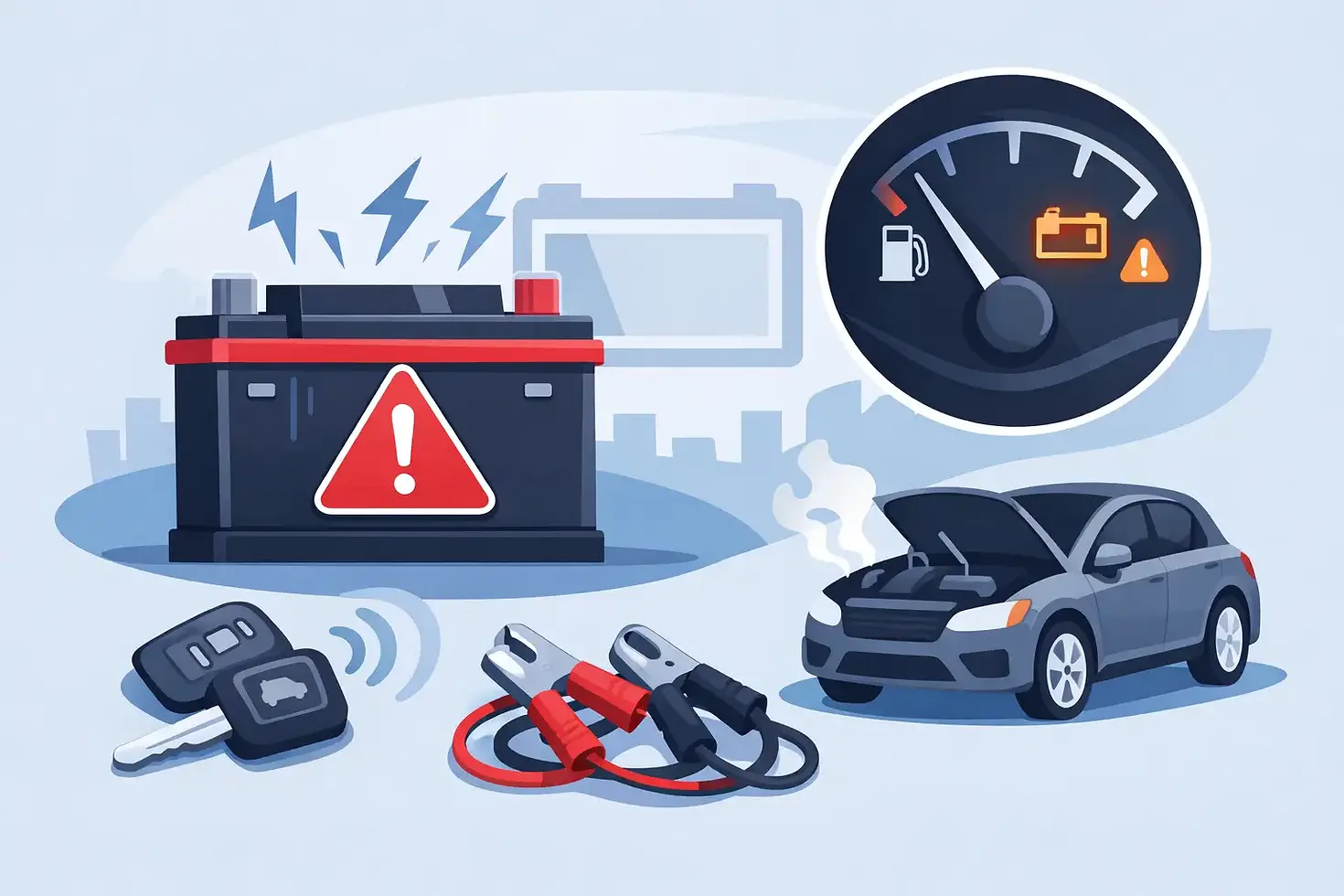
Dead Battery Warning Signs You Shouldn't Ignore
That slow, dragging sound when you turn the key is easy to dismiss when you are already late for work, heading to the ferry, or packing up for a weekend trip. But dead battery warning signs often show up well before your vehicle refuses to start. Paying attention early can save you from being stranded in a Parksville parking lot, on a rural Vancouver Island road, or at a trailhead with limited service.
A battery can fail without much notice, especially during cold snaps, wet weather, or after a vehicle has been sitting. Still, most batteries give drivers a few useful clues. The key is knowing which signs point to a weak battery, which may indicate another electrical problem, and when it is safer to call for roadside help.
Common Dead Battery Warning Signs
Slow or laboured engine cranking
A slow crank is one of the clearest warning signs. When you turn the key or press the start button, the engine may sound like it is turning over reluctantly before it starts. You may hear a drawn-out rrr-rrr-rrr instead of the usual quick start.
This happens when the battery no longer has enough stored power to supply the starter properly. The vehicle may still start today, but a cold morning, an extra stop on the way home, or leaving the radio on for a few minutes could be enough to make the next start unsuccessful.
Clicking when you try to start the vehicle
A rapid clicking sound usually means the starter is not getting enough power. A single heavy click can also point to a starter or connection issue, so it is not always the battery. However, repeated fast clicks combined with dim lights or a weak crank strongly suggest a low battery charge.
Do not keep trying the ignition over and over. Each attempt draws more power from an already weak battery. If the vehicle does not start after a reasonable attempt, switch off accessories and arrange a battery boost or diagnostic check.
Dim lights and weak electrical accessories
Headlights that look noticeably dim at idle, interior lights that fade, or a dashboard screen that flickers can all signal low battery voltage. Power windows may move slowly, the blower fan may seem weak, and door locks may respond inconsistently.
Some modern vehicles shut down non-essential features when voltage is low. You might see warning messages, a clock that resets, or an infotainment system that restarts. These symptoms can feel random, but they are often the vehicle protecting its remaining power.
Battery warning light on the dash
The battery-shaped warning light does not always mean the battery itself is worn out. More often, it means the charging system is not working as it should. The alternator, drive belt, wiring, battery terminals, or battery can all be involved.
If this light comes on while driving, reduce unnecessary electrical load where safe to do so. Turn off items such as seat warmers, rear defrost, and accessories you do not need. Do not assume the vehicle will keep running until you get home. Once the stored charge is used up, the engine can stall and may not restart.
A battery case that looks swollen or damaged
If you can safely see the battery under the hood, look for a bulging case, cracks, leaks, or corrosion around the terminals. A swollen battery should not be boosted or handled casually. Excess heat, overcharging, or internal failure can cause the case to expand, and a damaged battery may leak corrosive material.
White, blue, or green buildup on the terminals can interfere with charging and starting. Cleaning connections may help in some cases, but corrosion is also a reason to have the battery and charging system inspected. Wear proper protection and avoid touching residue with bare hands.
A battery that is three to five years old
Battery life depends on the battery type, vehicle use, weather exposure, and charging system. Many vehicle batteries last three to five years, but some fail sooner. Short trips are especially hard on a battery because the alternator may not have enough time to fully replace the power used to start the engine.
If your battery is getting older and the vehicle has begun cranking slowly, do not wait for a no-start situation. A quick test at a repair shop can show whether it is holding a charge and whether the alternator is charging it properly.
Why Batteries Fail on Vancouver Island
Cold weather gets most of the blame for dead batteries, but damp conditions and changing temperatures can be hard on electrical connections as well. Vancouver Island drivers also tend to make plenty of short trips: school runs, errands, commuting between communities, or quick drives to the beach or trail. That pattern can leave a battery partly charged over time.
Vehicles that sit for days or weeks can have the same problem. RVs, seasonal vehicles, work trucks, and second cars may slowly lose charge through security systems, electronics, and small parasitic draws. A battery tender may be worthwhile for a vehicle that is stored, but it needs to be the right type and used according to the manufacturer’s instructions.
A dead battery can also be the symptom, not the cause. An alternator that is not charging, a loose belt, corroded cable, poor ground connection, or an electrical draw can drain even a relatively new battery. Replacing the battery without finding the underlying issue may only delay the next breakdown.
What to Do When Your Vehicle Will Not Start
First, make sure the vehicle is in park or neutral, the parking brake is applied, and all accessories are switched off. Check for obvious concerns such as a loose battery terminal or lights left on. If the battery case is damaged, leaking, or swollen, do not attempt a boost.
If you have jumper cables and know how to use them safely, a boost may get you moving. Follow the instructions in your owner’s manual, use clean connection points, and keep cables clear of moving parts. Never smoke near a battery, and do not boost a frozen battery. If you are uncertain about the process, calling for help is the better choice.
A successful boost does not prove the problem is solved. Drive directly to have the battery and charging system tested rather than shutting the vehicle off for multiple stops. If the vehicle dies soon after a boost, the alternator or another charging-system fault may be the issue.
For hybrid and electric vehicles, use extra caution. Their 12-volt batteries can still go flat, but the high-voltage system must not be treated like a conventional battery. Consult the owner’s manual or request trained roadside assistance instead of guessing.
When a Battery Boost Is Not Enough
A boost is useful when a good battery has simply lost charge, such as after lights were left on. It is less useful when the battery cannot retain power, the terminals are badly corroded, or the charging system has failed. Repeated boosts can leave you relying on luck and may put you in a worse location when the vehicle finally stops.
Call for roadside assistance if you are stopped in an unsafe area, do not have the correct equipment, suspect electrical damage, or have tried a boost without success. All Island Towing & Automotive Repairs can provide a battery boost, towing when needed, and practical follow-up support so the cause can be addressed rather than guessed at.
Preventing the Next No-Start Morning
A small amount of routine attention goes a long way. Have an aging battery tested before winter, keep terminals clean and secure, and make sure long-sitting vehicles are properly maintained. If you mostly drive short distances, take the vehicle for an occasional longer drive or ask a technician whether a charger or battery tender makes sense for your situation.
Before an overnight trip, camping weekend, or early ferry departure, notice how confidently your vehicle starts. A battery rarely picks a convenient time to quit, but acting on the first slow crank gives you a much better chance of dealing with it safely and on your own schedule.


Comments